
Almonds
The Ancient Traveler
Did you know that almonds were among the first foods intentionally carried by ancient travellers?
Long before energy bars, packaged snacks, or sports nutrition existed, travellers needed foods that were lightweight, nutritious, and capable of surviving long journeys without spoiling.
Almonds met all three requirements naturally.
Their hard shell provided protection. Their rich nutritional profile provided sustained energy. And unlike many foods, they remained edible long after harvest without requiring refrigeration or elaborate preservation.
From ancient Silk Road merchants to modern hikers, almonds have been a trusted travel companion across thousands of years of human history.
For thousands of years, almonds have travelled wherever humans travelled. They survived long journeys, nourished traders along the Silk Road, accompanied explorers, and fed communities through seasons of scarcity. Their durability, nutritional density, and natural shelf life made them one of the most practical foods ever cultivated. The almond's story is ultimately one of dependability — a food that delivered consistent nourishment across changing civilizations, geographies, and generations.
Some foods become popular because they taste good.
Others earn their place in history because they solve a problem.
Almonds did both.
For thousands of years, almonds were among the most practical foods available to people on the move. Merchants, soldiers, pilgrims, and explorers carried them because they were lightweight, nourishing, and naturally resistant to spoilage. Along ancient trade routes, almonds helped fuel some of the most significant journeys in human history.
Yet almonds were also prized in royal courts, sacred ceremonies, and festive celebrations. They appeared in the tombs of Egyptian pharaohs, in the recipes of medieval European kitchens, and in the sweets of Indian festivals. Few foods have moved so effortlessly between the practical and the prestigious.
Today, almonds are one of the world's most researched, most consumed, and most celebrated nuts. Their story spans continents and millennia — a quiet testament to what happens when a food truly earns its place in human life.
Discover Fascinating Facts About Almonds
Did you know that almonds have been cultivated for more than 4,000 years?
Archaeological evidence suggests almonds were being cultivated thousands of years ago in regions surrounding the Mediterranean and Western Asia. Ancient civilizations valued them enough to actively plant, harvest, and trade them long before modern agriculture developed.
But why were almonds worth the effort?
Unlike many foods that spoil quickly, almonds could be stored and transported with relative ease. Their combination of flavour, durability, and nourishment made them highly desirable in a world where food preservation was a constant challenge.
This helps explain why almonds have survived not just as a crop, but as a cultural staple across millennia.
Did you know that almonds travelled the ancient Silk Road?
The Silk Road wasn't a single road but a vast network of trade routes connecting Asia, the Middle East, and Europe.
Alongside silk, spices, precious stones, and textiles travelled something much more practical: food.
Almonds became a favourite trading commodity because they were lightweight, nutritious, and resistant to spoilage. Merchants could carry them over long distances without worrying about rapid deterioration.
In many ways, almonds were one of the original global foods, spreading across continents long before modern logistics existed.
Did you know that almonds were discovered in King Tutankhamun's tomb?
When archaeologists opened the tomb of the Egyptian Pharaoh Tutankhamun, they discovered almonds among the items buried with him.
Why would a ruler be buried with almonds?
Ancient Egyptians often placed valuable foods and possessions in tombs for use in the afterlife. The presence of almonds suggests they were considered precious enough to accompany a king on his eternal journey.
More than 3,000 years later, that small discovery provides a fascinating glimpse into the importance almonds once held in royal societies.
Did you know that almonds are actually seeds, not true nuts?
Most people think of almonds as nuts, but botanically they are the seeds found inside the fruit of the almond tree.
The outer fruit dries and splits open as it matures, revealing a hard shell that protects the seed inside.
So why do we still call them nuts?
Because in everyday culinary language, foods with similar textures, uses, and nutritional characteristics are grouped together as nuts, even when their botanical classification differs.
It's a reminder that science and cooking sometimes tell slightly different stories about the same food.
Did you know that almonds naturally contain Vitamin E?
Vitamin E is one of the most recognized antioxidants found in foods.
But what exactly does an antioxidant do?
Every day, normal metabolism and environmental factors create unstable molecules known as free radicals. Antioxidants help protect cells from oxidative stress caused by these processes.
Almonds are among the better-known natural sources of Vitamin E, which helps explain why they are frequently discussed in conversations about balanced nutrition and wellness.
Did you know that magnesium contributes to more than 300 processes in the human body?
Magnesium rarely receives the attention given to protein or vitamins, yet it participates in hundreds of biochemical processes.
These include functions related to muscle activity, nerve signalling, and energy metabolism.
Almonds naturally contain magnesium, making them one of several foods that help contribute to overall dietary intake of this important mineral.
Sometimes the nutrients that receive the least attention perform some of the most important work.
Did you know that almond trees are among the earliest trees to bloom each year?
In many growing regions, almond blossoms appear before the leaves fully emerge.
This early flowering creates spectacular landscapes covered in white and pale pink blossoms.
But it also creates a challenge.
Blooming early means almond trees are more vulnerable to unexpected weather changes. Farmers carefully monitor growing conditions because the flowering period plays a crucial role in determining the eventual harvest.
The beauty of almond blossoms is matched only by their importance to the crop itself.
Did you know that almond trees depend heavily on pollinators?
Every almond begins its journey as a blossom.
When almond trees bloom, bees and other pollinators move from flower to flower carrying pollen that helps fertilize the blossoms. Without successful pollination, many flowers would never develop into almonds.
This relationship is one of nature's great partnerships. The tree provides nectar and pollen, while pollinators help the tree reproduce.
The next time you enjoy an almond, you're also witnessing the result of countless tiny interactions between flowers and pollinators that took place months earlier.
Did you know that almonds have a built-in travel case?
Nature designed almonds for survival.
The edible kernel sits inside a hard shell, which in turn develops inside the fruit of the almond tree. This layered protection helps shield the seed from environmental damage and predators.
For ancient traders and travellers, this natural packaging offered another advantage: almonds could be transported over long distances without the elaborate preservation methods required by many other foods.
What protected the almond in nature also helped it become one of humanity's earliest travel foods.
Did you know that not all almonds are sweet?
Most almonds sold for eating are sweet almonds, prized for their mild flavour and versatility.
However, there is another type known as the bitter almond. Bitter almonds contain naturally occurring compounds that require processing before safe culinary use. Historically, extracts derived from bitter almonds contributed flavour to certain foods and fragrances.
This distinction reminds us that even within a single species, nature can produce remarkably different characteristics.
The almond you enjoy today is the result of centuries of cultivation and selection.
Did you know that almond blossoms are celebrated in many parts of the world?
Before the first almond harvest appears, almond trees produce spectacular displays of white and pale pink flowers.
In several countries, the arrival of almond blossoms is viewed as a sign that winter is ending and spring is approaching. Entire landscapes can transform into seas of flowers, attracting visitors, photographers, and nature enthusiasts.
For farmers, however, the blossoms represent much more than beauty. Every flower has the potential to become an almond, making blossom season one of the most important periods of the agricultural year.
Did you know that almonds helped shape global trade routes?
Today, almonds are available almost everywhere.
For much of history, that wasn't the case.
Almonds travelled through trading networks connecting Asia, the Middle East, North Africa, and Europe. Because they stored well and retained their quality during long journeys, they became valuable commodities in ancient and medieval commerce.
Their movement across continents helped spread not only the crop itself, but also recipes, culinary traditions, and agricultural knowledge.
In many ways, almonds were among the original ambassadors of global food culture.
Did you know that almonds became a symbol of prosperity in many cultures?
Throughout history, foods that were nutritious, durable, and difficult to obtain often became associated with abundance and prosperity.
Almonds frequently appeared in royal kitchens, festive meals, and ceremonial foods. Their value extended beyond nutrition — they were often viewed as gifts worthy of special occasions.
Even today, almonds remain a popular component of gifting traditions, festive celebrations, and premium food hampers across many parts of the world.
Some foods nourish the body. Others also carry cultural meaning.
Did you know that almonds have a special place in Indian food culture?
In India, almonds are known as Badam, a name recognized across generations.
For centuries, almonds have appeared in festive sweets, beverages, desserts, and traditional family recipes. They are often included during celebrations, weddings, festivals, and gifting occasions.
What makes almonds particularly remarkable is how naturally they integrated into Indian cuisine despite originating elsewhere. Over time, they became so familiar that many people think of them as an intrinsic part of India's culinary landscape.
Did you know that almond milk is much older than most people realize?
Many people associate almond milk with modern food trends.
In reality, almond-based beverages have existed for centuries.
Historical records show that almond milk was used in parts of Europe and the Middle East long before refrigeration existed. Unlike dairy milk, it could be prepared when needed and was useful in recipes where animal milk was unavailable or unsuitable.
Modern consumers may see almond milk as innovative, but its roots stretch surprisingly far into the past.
Did you know that marzipan owes its existence to almonds?
Marzipan is a confection made primarily from almonds and sugar.
For centuries, it has been crafted into decorative sweets, festive treats, and elaborate edible artwork. Different regions developed their own styles, traditions, and recipes.
What makes marzipan fascinating is its ability to transform a simple almond into something that sits at the intersection of food, craftsmanship, and celebration.
Few ingredients have inspired such a unique culinary tradition.
Did you know that California produces most of the world's almonds?
Although almonds originated in regions stretching from Western Asia to the Mediterranean, modern almond production is dominated by California.
The state's climate, soil conditions, and agricultural infrastructure proved exceptionally well suited to almond cultivation.
This creates an interesting contrast: a crop with ancient roots in one part of the world now finds its largest commercial home thousands of kilometres away.
The almond's journey mirrors the broader story of globalization itself.
Did you know that almonds naturally provide plant-based protein?
Protein is often associated with foods such as dairy, eggs, meat, and legumes.
Yet almonds also contribute plant-based protein, helping explain why they have remained popular among travellers, traders, and modern snackers alike.
When combined with healthy fats, fibre, and minerals, protein contributes to the satisfying nature of almonds.
This balance is one reason almonds have maintained their reputation as a dependable food across centuries and cultures.
Did you know that almonds are one of the world's most researched foods?
Because almonds are widely consumed across many countries, they have attracted significant scientific and nutritional interest.
Researchers have studied their cultivation, nutritional composition, agricultural practices, and culinary applications for decades.
This extensive attention reflects something important: almonds are not a passing trend. They are one of humanity's longest-standing and most widely appreciated foods.
Few ingredients have accumulated such a long record of both cultural and scientific interest.
Did you know what almonds are called in different Indian languages?
India's linguistic diversity has given almonds many names, although most are variations of the Persian-derived word Badam, which travelled into the Indian subcontinent through centuries of cultural and trade connections.
In Hindi and Marathi, written in the Devanagari script, almonds are called बादाम (Badam).
In Gujarati, they are written as બદામ (Badam).
In Punjabi, using the Gurmukhi script, almonds are commonly written as ਬਾਦਾਮ (Badam).
In Bengali, almonds are known as বাদাম (Badam).
In Tamil, almonds are often called பாதாம் (Badham).
In Telugu, they are written as బాదం (Badam).
In Kannada, almonds are commonly known as ಬಾದಾಮಿ (Badami).
In Malayalam, they are written as ബദാം (Badam).
The widespread presence of similar names across Indian languages reflects the almond's long history of trade, cultural exchange, and culinary integration across the subcontinent.
Few foods have travelled as far, lasted as long, or earned humanity's trust as completely as almonds. From ancient trade routes and royal tombs to modern kitchens and wellness conversations, almonds have remained a constant presence across thousands of years of human history.
Their journey is a reminder that the most enduring foods are those that solve real problems — providing nourishment, durability, and flavour in equal measure. The almond didn't survive millennia because it was fashionable. It survived because it was genuinely useful, genuinely nourishing, and genuinely remarkable.
More than a nut, the almond is a symbol of how food and human civilization have always moved together — each shaping the other across centuries of shared history.
Inspired by what you've discovered?
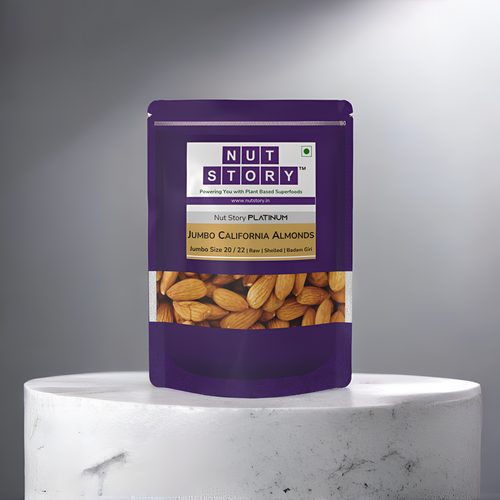
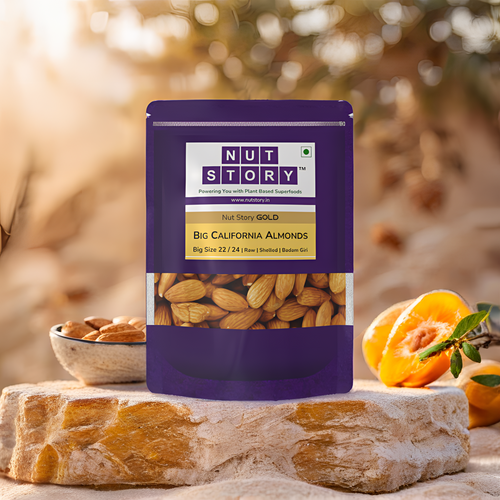
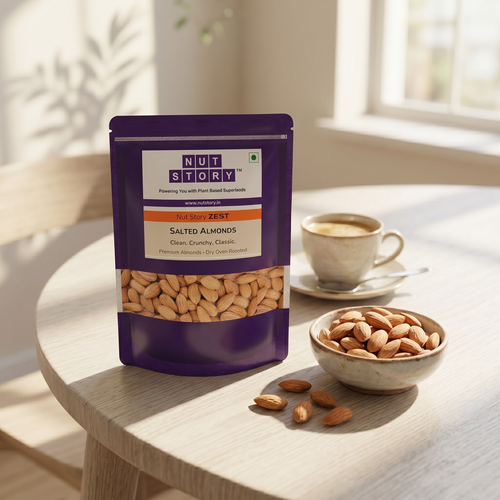
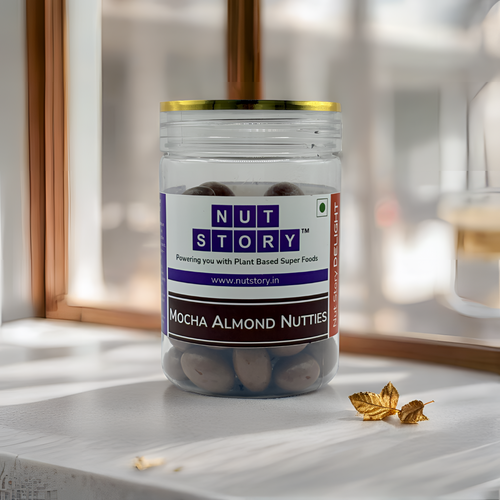
Explore Nut Story Almonds & Related Products



- Choosing a selection results in a full page refresh.
- Opens in a new window.
- Opens external website.
- Opens external website in a new window.