
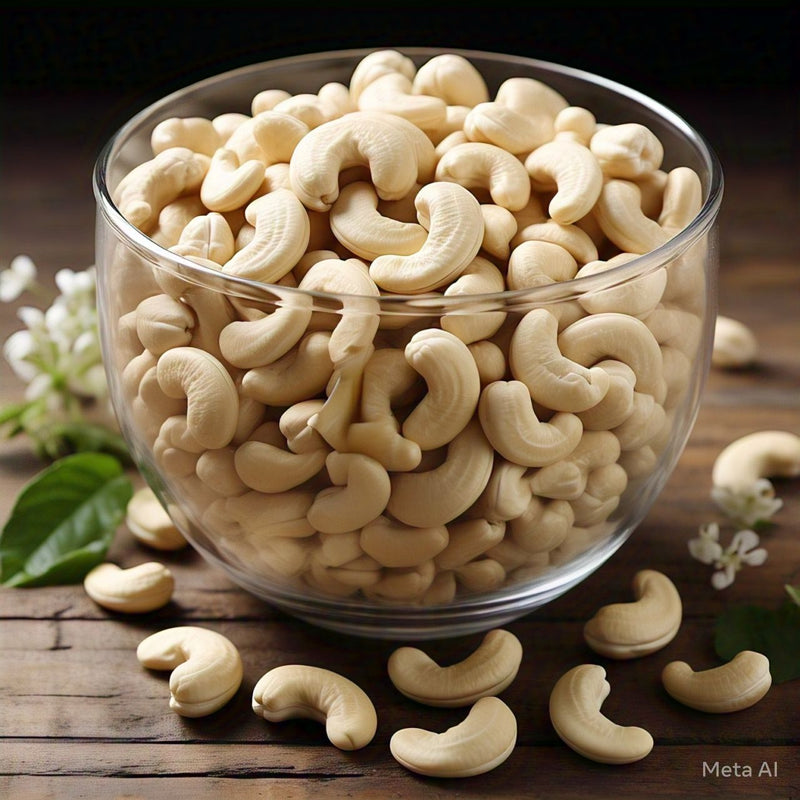
Cashews
The Rule Breaker
Did you know that cashews aren't actually nuts?
Most people spend their entire lives calling cashews nuts.
Botanically, however, cashews are seeds.
They develop at the bottom of a fleshy structure known as the cashew apple and grow outside the fruit rather than inside it. This makes the cashew one of nature's most unusual edible seeds.
So why do we still call them nuts?
Because in culinary language, foods with similar textures, flavours, and uses are grouped together as nuts even when their botanical classifications differ.
The cashew's identity crisis is fitting. After all, it has been breaking rules since the day it evolved.
Most foods follow predictable rules.
Cashews do not.
They grow outside their fruit. Their "apple" is not the part most people eat. Their shell contains a natural protective substance. They can appear in royal curries, festive sweets, vegan cheeses, creamy sauces, desserts, and premium snacks.
For centuries, people have valued cashews because they refuse to fit neatly into any single category. Their story is one of adaptation, creativity, and surprising versatility.
If nature were redesigning foods from scratch, it might struggle to invent something as unusual as the cashew.
Unlike most fruits, where the seed develops safely inside, the cashew seed grows outside the fruit, hanging beneath a swollen structure known as the cashew apple. The edible kernel is protected by a sophisticated shell that requires careful processing before it reaches our kitchens. Even the fruit itself tells an unusual story—it is widely enjoyed in some regions yet remains largely unknown in others.
The cashew's journey is equally remarkable. Native to Brazil, it travelled across oceans with Portuguese explorers, found a second home in India, and eventually became one of the world's most versatile foods. Today, cashews appear everywhere from traditional Indian sweets to modern plant-based cuisine.
Few foods have broken as many rules—or succeeded because of it.
Discover Fascinating Facts About Cashews
Did you know that cashews aren't actually nuts?
Most people spend their entire lives calling cashews nuts.
Botanically, however, cashews are seeds.
They develop at the bottom of a fleshy structure known as the cashew apple and grow outside the fruit rather than inside it. This makes the cashew one of nature's most unusual edible seeds.
So why do we still call them nuts?
Because in culinary language, foods with similar textures, flavours, and uses are grouped together as nuts even when their botanical classifications differ.
The cashew's identity crisis is fitting. After all, it has been breaking rules since the day it evolved.
Did you know that every cashew grows outside its fruit?
Most fruits keep their seeds safely tucked away inside.
Cashews do the exact opposite.
The colourful cashew apple develops first, and the kidney-shaped seed grows beneath it, hanging visibly outside the fruit. This unusual arrangement makes the cashew one of the easiest seeds to spot on a tree.
Why would nature design it this way?
Scientists believe the arrangement helps the seed mature independently while benefiting from the fruit's role in attracting animals and aiding seed dispersal.
If almonds are discreet and hidden, cashews are impossible to miss. Even their growth pattern refuses to follow convention.
Did you know that the cashew apple is a fruit that most people never get to taste?
When people think about cashews, they usually focus on the seed.
Yet the colourful structure above it—the cashew apple—is also edible.
In Brazil, Goa, parts of Africa, and other tropical regions, people enjoy it fresh, as juice, in jams, and in traditional recipes. The fruit is juicy, aromatic, and naturally rich in Vitamin C.
So why isn't it common in supermarkets?
Because the cashew apple is delicate and highly perishable. It spoils quickly after harvest, making transportation difficult.
As a result, one of the most widely cultivated fruits in tropical regions remains largely unknown to consumers around the world.
Did you know that cashews originated in Brazil?
Long before cashews became associated with India, they grew naturally along the tropical coastline of Brazil.
Indigenous communities harvested both the fruit and the seed centuries before European explorers arrived. The tree was valued not only as a food source but also for its ability to thrive in challenging coastal environments.
Today, cashews are consumed around the world, but their story began in a relatively small corner of South America.
It's a reminder that some of the world's most popular foods started as local treasures before becoming global favourites.
Did you know that Portuguese explorers brought cashews to India?
During the 16th century, Portuguese traders carried cashew trees from Brazil to Goa.
Interestingly, the original goal was not to create a snack industry.
The trees were introduced primarily to stabilize soil and reduce coastal erosion. Their extensive root systems helped protect fragile coastlines and improve land management.
Only later did people begin to appreciate the culinary value of the crop itself.
Few foods can claim to have arrived as an environmental solution before becoming a culinary success story.
Did you know that Goa helped transform the cashew into an Indian icon?
Cashews may have originated in Brazil, but they found a second home in India.
Over time, the crop became deeply woven into Goan agriculture, cuisine, and culture. The cashew apple is traditionally used to produce Feni, one of Goa's most famous heritage beverages, while the kernels became a prized ingredient in Indian kitchens.
This transformation is remarkable because it shows how a food introduced from another continent can eventually become part of a region's identity.
Today, many people are surprised to learn that the cashew's Indian journey began with a voyage across the Atlantic Ocean.
Did you know that raw cashews cannot be eaten directly from the tree?
This surprises almost everyone.
The shell surrounding the cashew seed contains a naturally occurring protective substance called urushiol, a compound also found in poison ivy.
Nature developed this chemical defence to protect the seed from insects, animals, and environmental threats.
As a result, cashews must be carefully processed before they become the familiar snack we enjoy.
The next time you eat a cashew, remember that what appears to be a simple nut has already completed a surprisingly sophisticated journey from tree to table.
Did you know that producing whole cashews requires remarkable skill?
Unlike many nuts that can simply be cracked open, cashews demand precision.
Processors must remove the shell while protecting the delicate kernel inside. A small mistake can break the cashew, reducing its value and changing its commercial grade.
This is one reason premium whole cashews command higher prices than broken pieces.
The challenge isn't growing the cashew tree.
The challenge is successfully unlocking the treasure hidden inside.
Did you know that cashews became one of India's favourite festive ingredients?
Walk into an Indian sweet shop during a festival and you'll quickly discover the importance of cashews.
From Kaju Katli to rich gravies, premium desserts, and festive gift boxes, cashews have become synonymous with celebration and hospitality.
Why cashews?
Their mild flavour, creamy texture, and ability to blend seamlessly into recipes make them uniquely versatile.
A seed that originated in Brazil eventually became one of the defining ingredients of Indian festive cuisine—another example of the cashew's remarkable ability to adapt and thrive wherever it travels.
Did you know that cashews helped redefine what a nut can do in the kitchen?
Most nuts have a limited role.
They are eaten as snacks, sprinkled on desserts, or occasionally used in cooking.
Cashews are different.
Their naturally creamy texture allows them to be transformed into sauces, gravies, desserts, spreads, fillings, and beverages. In many recipes, they can provide richness without dominating flavour.
This versatility has made cashews favourites among home cooks, chefs, and food innovators alike.
Few foods move so effortlessly between sweet and savoury worlds.
Did you know that cashews naturally contain both copper and magnesium?
Many people recognize calcium and iron, but copper and magnesium rarely receive the same attention.
Copper contributes to several important functions in the body, while magnesium participates in hundreds of biochemical processes related to energy metabolism, muscle function, and nerve signalling.
Cashews naturally provide both minerals.
The interesting lesson is that some of the most important nutrients are often the ones most people know the least about.
Nature doesn't always advertise its best features.
Did you know that cashews are often called the "cream of the nut world"?
If almonds are known for crunch and walnuts for character, cashews are known for texture.
Their naturally smooth consistency makes them uniquely suited for creating creamy foods. This is why cashews appear in rich sauces, premium sweets, luxurious desserts, and increasingly in modern plant-based cuisine.
The remarkable part is that this creaminess comes from a seed that grows outside its fruit and requires careful processing before it reaches the kitchen.
Even the way cashews feel in the mouth is different from most other nuts.
Did you know that cashews played an important role in the rise of plant-based cuisine?
Long before plant-based foods became a global trend, cooks were discovering that cashews could be blended into smooth, creamy preparations.
Today, cashews are widely used to create dairy-free sauces, spreads, desserts, and beverages because of their naturally rich texture and mild flavour.
Why do cashews work so well?
Unlike many nuts, they blend into exceptionally smooth mixtures without becoming overly grainy or overpowering.
A seed that already broke botanical rules eventually helped redefine modern cooking as well.
Did you know that cashew trees can continue producing for decades?
A healthy cashew tree can remain productive for many years, providing repeated harvests from the same planting.
This longevity made cashew cultivation attractive in tropical regions, where farmers could benefit from sustained production over time.
While cashews may not live as long as pecan trees, they still represent an investment in the future rather than a single-season crop.
The tree's durability mirrors the adaptability that defines the cashew itself.
Did you know that India helped make cashews famous worldwide?
Today, cashews are consumed across continents, but India played a major role in popularizing them internationally.
For decades, Indian processors, exporters, traders, and culinary traditions helped introduce cashews to global markets. Indian cuisine also demonstrated how versatile cashews could be, inspiring countless applications beyond simple snacking.
Sometimes a food's success depends not only on where it originated but also on who helped the rest of the world appreciate it.
Did you know that not all cashews are graded equally?
When you purchase premium cashews, you're buying more than just a nut.
Cashews are carefully graded based on factors such as size, colour, and whether the kernel remains whole or broken during processing. Whole kernels are generally considered the most premium because preserving them requires greater skill during shell removal.
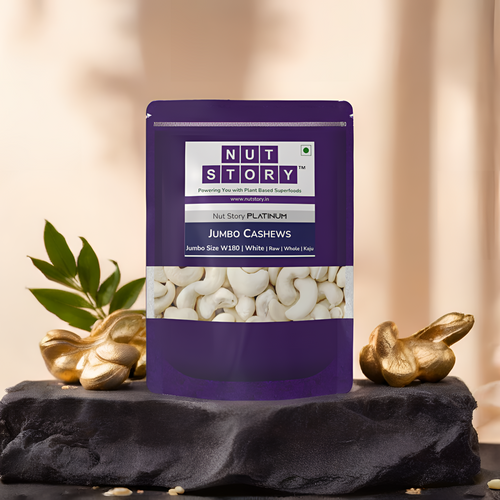
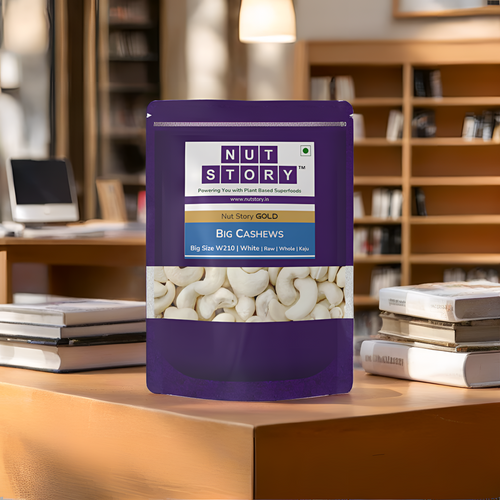
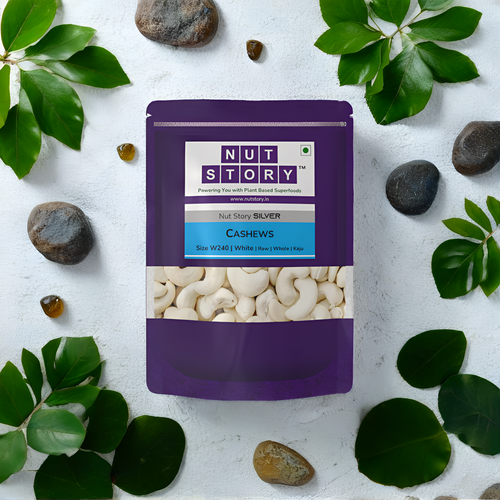
One of the most common grading systems uses codes such as W180, W210, W240, W320, and W450.
The letter "W" stands for White Whole, meaning the kernel is intact and retains its natural light colour.
The number indicates approximately how many kernels make up one pound (~454 grams) of cashews.
For example:W180 = about 180 kernels per pound (often called the "King of Cashews")W210 = about 210 kernels per poundW240 = about 240 kernels per poundW320 = about 320 kernels per poundW450 = about 450 kernels per pound
A lower number means a larger cashew.
This is why W180 cashews are generally considered larger and more premium than W320 or W450 grades.
The next time you see a grade such as W180 or W210 on a pack, you'll know you're looking at a globally recognized quality classification rather than a random product code.
Did you know that cashews contain mostly unsaturated fats?
The word "fat" often receives unfair criticism.
In reality, foods contain different types of fats, and cashews are known primarily for their unsaturated fats. These are the same broad category of fats found in foods such as olives, avocados, and several other nuts.
Cashews are also naturally cholesterol-free, like all plant foods.
These fats contribute to the rich texture and satisfying mouthfeel that make cashews so enjoyable to eat.
Ironically, one reason cashews taste indulgent is also one reason they have remained valued as a nutritious food for centuries. Nature has a way of making some of its most nourishing foods taste remarkably good.
Did you know that Vietnam became one of the world's leading cashew processors?
Although cashews originated in Brazil and became deeply established in India, Vietnam emerged as a global leader in cashew processing and exports.
This illustrates how the cashew's story spans multiple continents.
Brazil gave the world the tree.
India helped popularize the nut.
Vietnam became a major processing powerhouse.
Few foods have such an international identity.
Did you know that cashews are among the most globally travelled foods?
The journey of a cashew can be extraordinary.
A tree native to Brazil was carried by Portuguese explorers to India, cultivated across tropical regions, processed in different countries, and eventually enjoyed by consumers around the world.
In a single cashew, you can trace a story involving exploration, agriculture, trade, culture, and culinary innovation.
Its global success is proof that great foods know no borders.
Did you know what cashews are called in different Indian languages?
Few nuts are as widely recognized across India as the cashew.
In Hindi and Marathi, written in the Devanagari script, cashews are called काजू (Kaju).
In Gujarati, they are written as કાજુ (Kaju).
In Punjabi, using the Gurmukhi script, they are commonly written as ਕਾਜੂ (Kaju).
In Bengali, cashews are known as কাজু (Kaju).
In Tamil, they are written as முந்திரி (Mundhiri) or sometimes காஜு (Kaju) in commercial usage.
In Telugu, cashews are called జీడిపప్పు (Jeedipappu).
In Kannada, they are commonly known as ಗೋಡಂಬಿ (Godambi).
In Malayalam, they are written as കശുവണ്ടി (Kashuvandi).
Unlike pecans, which are still relatively new to India, cashews have become deeply embedded in Indian food culture. The diversity of regional names reflects just how successfully this Brazilian seed integrated into Indian life.
Few foods challenge expectations as thoroughly as the cashew. It isn't technically a nut. Its seed grows outside the fruit. The fruit itself is edible but rarely seen outside growing regions. The raw seed requires careful processing before it can be enjoyed. Yet despite breaking rule after rule, the cashew has become one of the world's most beloved foods.
From Brazilian coastlines to Goan plantations, from festive Indian sweets to modern plant-based cuisine, the cashew's story is one of adaptation, creativity, and versatility. It reminds us that sometimes the most remarkable things in nature are the ones that refuse to follow convention.
Inspired by what you've discovered?
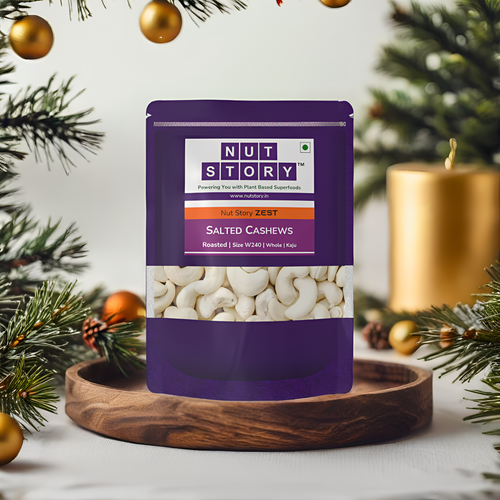
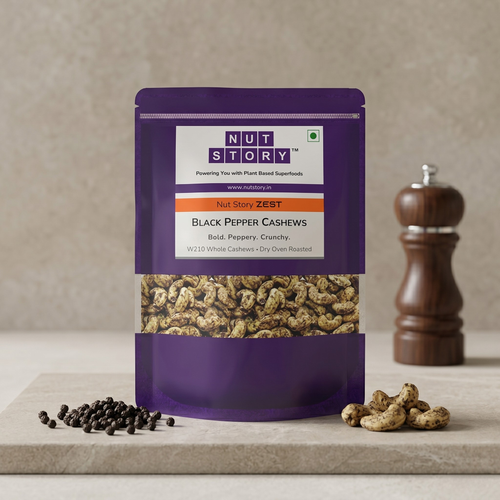
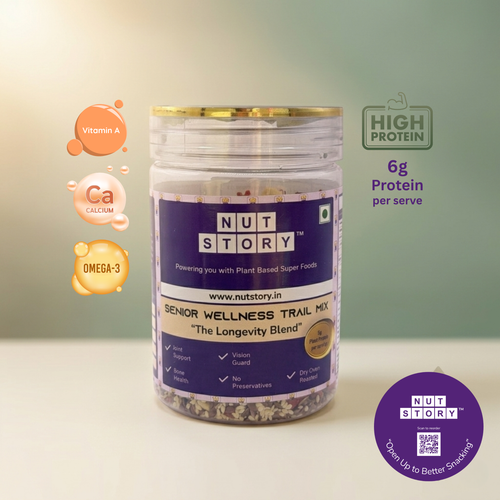
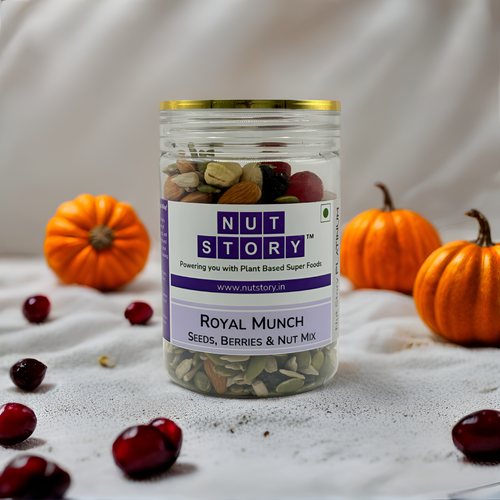
Explore Nut Story Cashews & Related Products


- Choosing a selection results in a full page refresh.
- Opens in a new window.
- Opens external website.
- Opens external website in a new window.